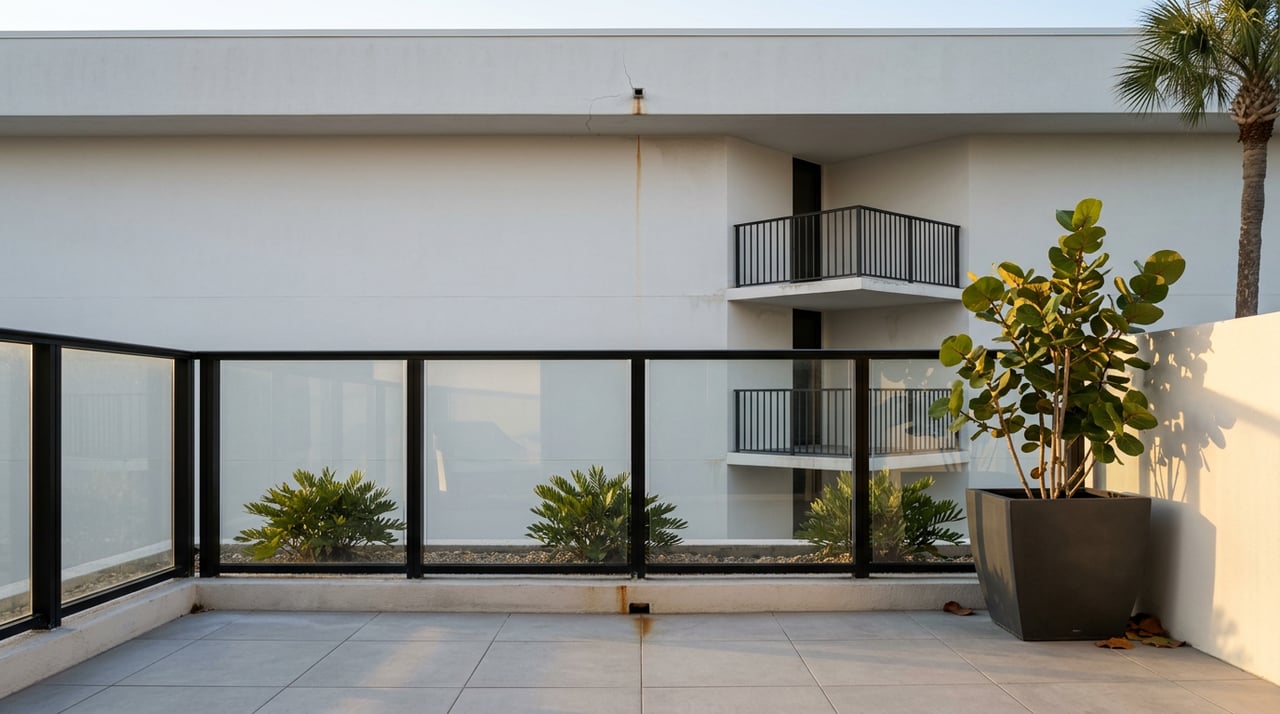
Siesta Key Condo SIRS Disclosure Guide for Sellers
August 13, 2026
August 13, 2026
If you have already read a guide to Florida's condo reserve laws this year, you know the shape of it. A number appears (SIRS), a date appears (December 31), and a warning appears about six-figure special assessments. Three sites have told you this already. What none of them told you is why the date on the calendar right now, less than five months out, behaves differently than the last two deadlines that came and went.
For two years running, the SIRS compliance date got pushed. 2024 became 2025. 2025 became 2026 for buildings coordinating the study with a milestone inspection. Boards and owners on Siesta Key learned a pattern: wait long enough, and Tallahassee moves the line. That pattern broke this year. Multiple bills aimed at softening or delaying the reserve mandate went into the 2026 legislative session and none of them passed. If you are listing a condo on the Key this fall, that failure matters more to your closing timeline than almost anything else in this guide.
Here is the sequence, laid out plainly:
| Legislative action | What it did | Resulting deadline |
|---|---|---|
| SB 4-D, signed May 26, 2022 | Created the SIRS and milestone inspection mandate for residential buildings three stories or taller, in direct response to the Surfside collapse | Initial SIRS due December 31, 2024 |
| SB 154, 2023 | Expanded the component list and clarified how SIRS and milestone inspections interact | No change to the 2024 date |
| HB 913, effective 2025 | Extended the initial SIRS deadline by one year | SIRS due December 31, 2025 |
| Coordinated extension | Associations whose milestone inspection is also due by December 31, 2026 may complete both studies together | SIRS due no later than December 31, 2026 |
| 2026 legislative session | Several bills proposing further delay or reduced reserve funding all failed to pass | No additional extension |
The Florida DBPR's own condominium timeline confirms this progression. What it cannot tell you, because it is not in the business of predicting politics, is whether there will be another round. The 2026 session is a data point on that question, and it points one direction. Lawmakers who watched Surfside's death toll reach 98 have not shown appetite for a third extension. Boards that budgeted around the assumption of more time are now the ones scrambling with under five months left on the clock.
A year ago, a buyer who saw an incomplete SIRS in a condo package might have shrugged. Extensions were common knowledge. Today, the same gap in the paperwork reads as risk, not routine. Buyers, their attorneys, and their lenders have absorbed the fact that this deadline held where the last two did not. That shift changes how a listing gets priced and how quickly it closes.
The DBPR requires structural inspection reports and reserve studies to become part of an association's official record, and they must be provided to potential purchasers. If your building's documents are thin, out of date, or simply not finished, you are not just missing paperwork. You are selling into a buyer pool that has started reading absence as a warning sign rather than a formality.
Before an inspection contingency closes on a Siesta Key condo now, expect requests for:
None of this is exotic. What has changed is the seriousness with which buyers now treat a missing item on that list. A gap that used to prompt a follow-up question now prompts a lower offer or a longer due diligence period.
A completed SIRS produces one figure that matters more than the rest: the percentage of required reserves the building actually has funded. As a rough industry benchmark, buildings funded at 70 percent or higher read as low risk. Buildings in the 30 to 70 percent range signal measured dues increases ahead. Below 30 percent, a special assessment becomes likely rather than hypothetical.
On Siesta Key specifically, the dollar range for a special assessment typically runs from around $2,000 to $10,000 per unit for routine capital work. In older or underfunded buildings, that figure has climbed to $25,000, $40,000, and past $60,000 for major structural repairs. After Hurricane Ian, several Gulf-front buildings on the Key hit owners with assessments north of $10,000 just to cover insurance deductibles, separate from the repair costs themselves. A buyer who sees a funded percentage under 30 is not being cautious for its own sake. They are pricing in a number that has already happened to their neighbors.
There is a second wrinkle worth knowing before you assume waiting improves your position. Beginning in 2026, the state now requires that replacement cost estimates for reserve items of $25,000 or more factor in inflation when the study is prepared. That means a SIRS completed later in the year, on a building that has deferred the study, is likely to show a larger funding gap than one completed earlier, not a smaller one. Time is not neutral here.
One nuance gets missed in almost every generic guide to this law. The original version of SB 4-D applied a strict 25-year milestone inspection clock to any building within three miles of the coast. That blanket rule no longer exists. Under the 2023 amendments, local enforcement agencies can choose to impose the earlier 25-year timeline if salt exposure and local conditions justify it, but it is now a local decision rather than a statewide default.
Practically, that means a 28-year-old tower on Siesta Key might already be inside its milestone inspection window while a building of the same age set back from the water elsewhere in Sarasota County is not yet due. If you are listing a condo here, confirming which clock your building is actually on, 25-year or 30-year, is worth a call to the local building department before you assume either one applies.
The concrete issues these inspections are turning up along this stretch of coast are not surprising to anyone who has spent time around Gulf-facing buildings. Spalling on coastal-facing facades, driven by salt-air corrosion of rebar, shows up consistently on Longboat Key, Lido Key, and Siesta Key towers. It is a known, budgetable repair when caught early. It becomes a special assessment problem when it is caught late, which is precisely what these inspections are designed to prevent. Not every building in the region is behind on this. 100 Central, the downtown Sarasota tower built above a Whole Foods, is one example of a building already operating fully inside the SB 4-D framework, a useful reminder of what it looks like when an association gets ahead of the paperwork instead of catching up to it.
Michelle Ward's background is in construction and design, and the practical use of that background here is simple: read the SIRS and milestone report the way a contractor reads a punch list, not the way a lawyer reads a contract. A funding percentage in the 40s is not a reason to panic. It is a reason to know, before a buyer's attorney raises it, what the association's plan is to close that gap and what your unit's share of it would likely be.
If your building's SIRS is already complete and reserves are funded, that is not a footnote. It is a selling point, and one that increasingly separates listings that move quickly from listings that sit. If the study is not finished, find out the scheduled completion date and have that answer ready before you list, not after a buyer asks. Sellers who assemble this package proactively, rather than reactively during an inspection period, are the ones controlling the timeline instead of reacting to it.
Does any of this apply if I'm selling a single-family home on Siesta Key rather than a condo? No. The SIRS and milestone inspection requirements under Florida law apply to condominium and cooperative associations with buildings three or more habitable stories. Single-family homes fall outside this framework entirely, though normal seller disclosure obligations for known defects still apply.
My building's SIRS isn't finished yet and I need to sell now. What are my options? You can still list and sell. Be direct with buyers about the study's status and expected completion date, and expect the buyer's financing and inspection timeline to build in room for it. Associations that have already completed a milestone inspection may delay their SIRS for up to two consecutive budget years following that inspection, so check where your building actually stands in that sequence before assuming you are out of compliance.
Can a buyer close without seeing a completed SIRS? They can, but most attorneys and lenders will want at minimum a written timeline for when the study will be delivered, along with the most recent board minutes and any known assessment history. The less documentation you can provide, the more that uncertainty tends to show up in the offer.
If you are weighing a sale on Siesta Key this year and want a straight read on what your building's paperwork actually says about your timeline and your price, The Michelle Ward Group can walk through it with you. Get your instant home valuation and let's talk through what the documents mean for your listing before a buyer's attorney gets to them first.
Stay up to date on the latest real estate trends.


The Michelle Ward Group is constantly building its reputation, which is critical to buyers and sellers of real estate. Michelle Ward Group is a well-experienced team that consistently delivers the results the most affluent home buyers and sellers demand.