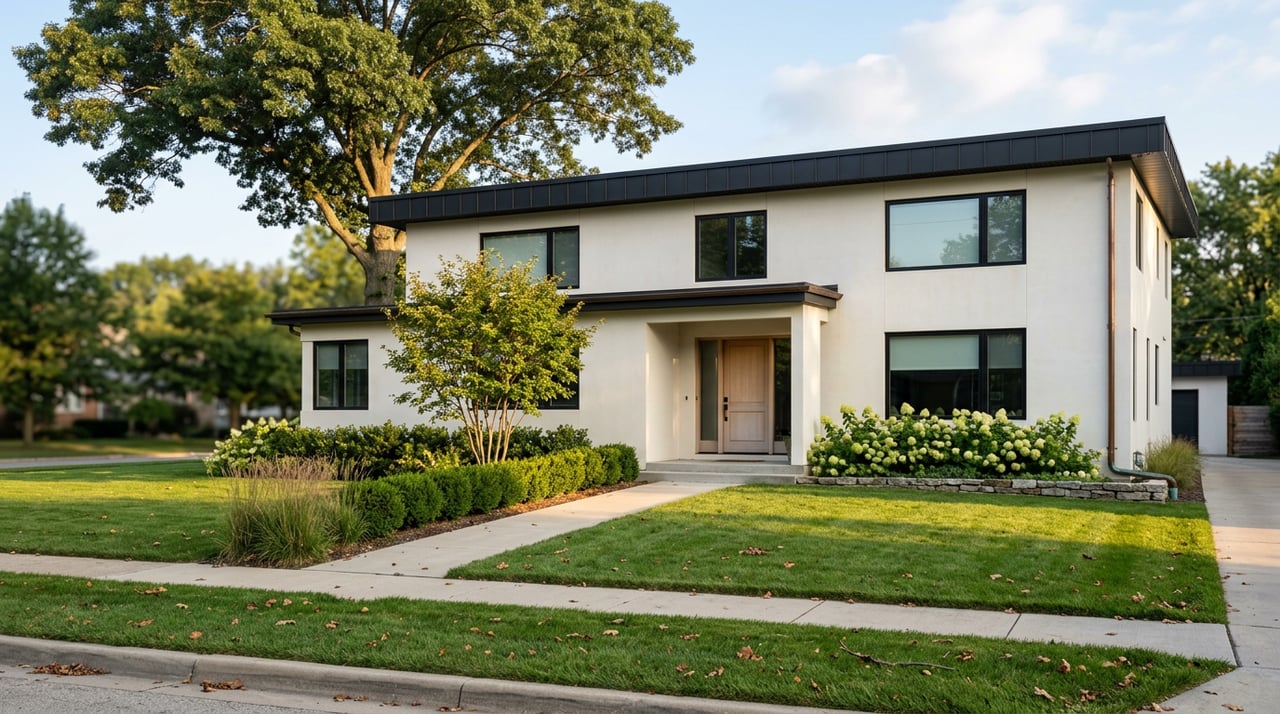
Riverside vs Brookfield Property Taxes: What Buyers Should Know
September 3, 2026
September 3, 2026
Say you're cross-shopping two brick colonials, one in Riverside and one three miles south in Brookfield. The Riverside listing costs more. You assume the tax bill follows the same math: bigger price, bigger burden. Pull the actual rate data and the story flips. Riverside's effective property tax rate sits at 2.77 percent. Brookfield's runs closer to 3.03 percent. The town with the higher price tag is taxed at the lower rate.
That gap is not a rounding error, and it is not the number most buyers check before they fall for a house. It is the number that determines what you actually pay every year you own it, and it moves for reasons that have nothing to do with how nice the kitchen looks.
Riverside's median annual property tax bill runs around $8,183, well above Brookfield's average of roughly $6,222. On paper that makes Riverside look like the more expensive place to own. But a tax bill is two numbers multiplied together: assessed value and rate. Riverside's bill is higher because its home values are higher, not because its rate is. Strip out the value and compare rate to rate, and Brookfield homeowners are paying a larger share of their property's worth in tax every year than Riverside homeowners are.
| Riverside | Brookfield | |
|---|---|---|
| Effective property tax rate | 2.77% | 3.03% |
| Average annual tax bill | ~$8,183 | ~$6,222 |
Neither number tells the whole story alone. Together they explain why a lower sticker price in Brookfield does not automatically mean a lower carrying cost relative to what you're buying. If you're weighing two homes of similar value across the town line, the Brookfield property is working harder, tax-wise, to fund the same kind of local services.
Cook County reassesses property in thirds, on a three-year rotation, and 2026 was Riverside Township's turn. Reassessment notices went out April 24, and county records show every category of Riverside housing stock moved. Single-family homes rose an average of 22 percent in assessed value this cycle. Condominiums rose 39 percent.
Riverside Township Assessor Mary Jo Miller broke the single-family number down further for the Riverside-Brookfield Landmark in May. The most common home type in the township, one-story houses between 1,000 and 1,800 square feet, grew about 20 percent. Older two-plus story homes under 2,200 square feet grew 25 percent. The largest of that same older housing stock, running 2,201 to 4,999 square feet, grew 34 percent, the steepest jump of any category Miller cited.
That spread matters if you're picking between a modest starter and one of Riverside's larger period homes. The bigger, older houses are absorbing more of this cycle's increase than the smaller, more common ones. A buyer comparing a compact one-story to a larger Victorian a few blocks over isn't just paying more for square footage. They're stepping into a valuation that grew faster, which feeds directly into the assessed value the tax rate gets applied to.
Miller also flagged something buyers moving from outside Cook County often miss:
"My mortgage or my escrow takes care of this, they do not."
New homeowners, she noted, carry the responsibility of watching their own reassessment. It is not automatic, and it is not something a lender's escrow account tracks for you the way it might elsewhere.
Cook County collects property taxes in arrears. The bill a seller shows you at closing reflects last year's assessed value, not this year's reassessment. Miller was direct about the disconnect this creates: appealing your 2026 valuation does nothing to your 2025 bill. The two cycles, in her words, "have nothing in common."
Here is why that matters if you're buying into Riverside now rather than watching from the sidelines. Whatever assessed value comes out of this 2026 cycle holds for three years unless successfully appealed. Buy a home this fall and the valuation locks in behind you. You inherit whatever number the county settled on, not the one reflected in the current tax bill you saw during your search.
The appeal window itself moved in stages. The Cook County Assessor's office took appeals through June 8. Riverside Township then opened its own Board of Review appeal period, with the filing deadline landing September 1. For anyone who closes on a Riverside home after that date, the number is fixed for the remainder of the three-year cycle. There's no round two until 2029.
None of this means Riverside is the "cheaper" option or that Brookfield is overtaxed. Rate and value pull in opposite directions and neither one wins outright. What it means is that the shorthand most buyers use, comparing sticker prices across town lines and assuming the tax math tracks the same way, breaks down the moment you check the actual rate.
If you're deciding between a Riverside listing and something in Brookfield or La Grange, the sticker price gets you halfway to an honest comparison. The other half is the rate applied where you're buying, layered against how far this year's reassessment pushed the specific type of home you're looking at. A one-story starter and a large pre-1960s two-story in the same town aren't absorbing the same valuation increase, and a Riverside home and a Brookfield home of similar price aren't taxed the same way per dollar of value.
That second calculation is the one worth running before you write an offer, not after you've moved in and opened the first bill that reflects the new assessment.
Michelle Ward built her practice on exactly this kind of math, reading past the number a listing leads with to the one that actually determines what a property costs to hold. If you're weighing Riverside against a neighboring suburb, or trying to understand what this reassessment cycle means for a specific address, The Michelle Ward Group can walk through the comparison with you before you're locked into three years of an assessment you didn't see coming.
Does a higher home value always mean a higher effective tax rate? No. Riverside's higher median home values come with a lower effective rate than Brookfield's, which is why comparing sticker prices alone gives an incomplete picture of carrying cost.
If I buy in Riverside after the Board of Review deadline, can I still appeal? The formal appeal windows for this reassessment cycle closed with the Assessor's office on June 8 and with the Board of Review on September 1. The next scheduled reassessment for Riverside Township comes in 2029.
Will my mortgage escrow automatically adjust for the new assessment? Not necessarily right away. Riverside Township Assessor Mary Jo Miller has pointed out that reassessment is a homeowner responsibility to track, not something escrow accounts handle on their own timeline.
Stay up to date on the latest real estate trends.


The Michelle Ward Group is constantly building its reputation, which is critical to buyers and sellers of real estate. Michelle Ward Group is a well-experienced team that consistently delivers the results the most affluent home buyers and sellers demand.