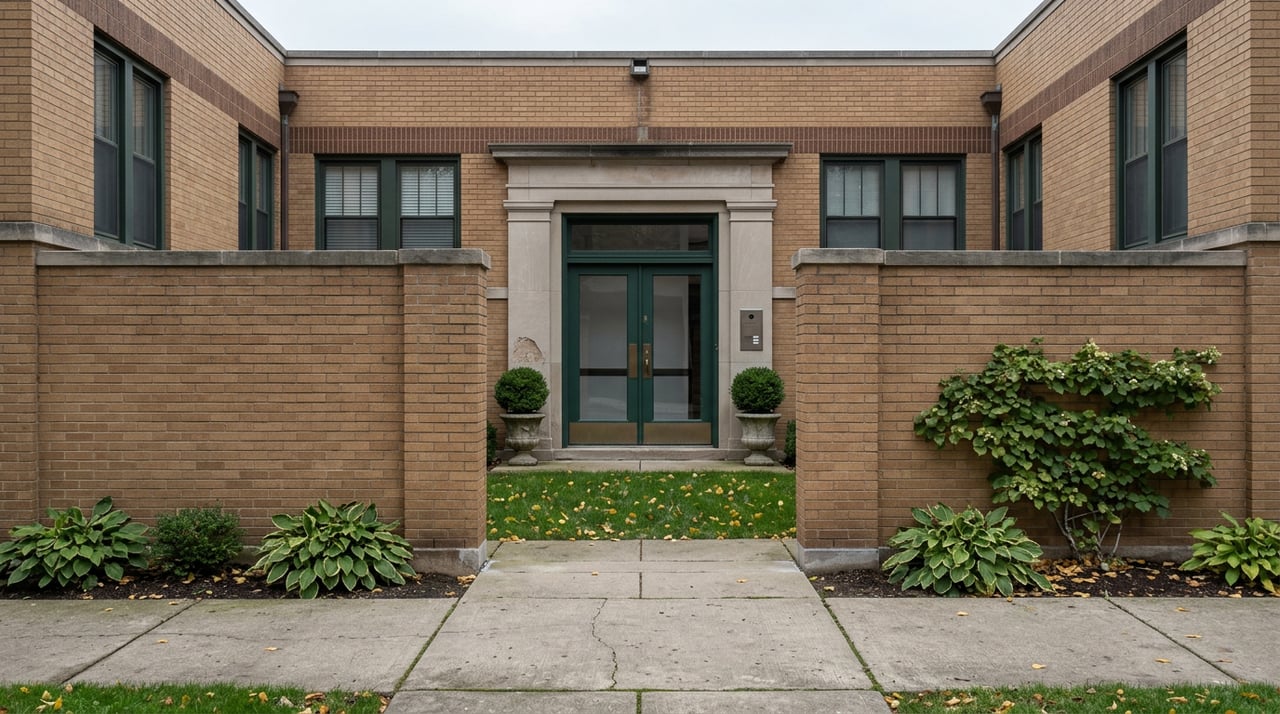
Selling Your Chicago Condo Before the Sarasota Move: The Two Clocks That Actually Set Your Closing Date
August 20, 2026
August 20, 2026
Your Chicago condo went under contract on a Tuesday. You've already started measuring rooms in Siesta Key listings, penciling in a closing date forty-five days out, telling the movers to hold that week. So why does your attorney keep saying the deal "isn't firm yet"?
Because in Illinois, a signed contract is not the same thing as a done deal. It's the start of two separate countdowns, and they don't run on the same clock. Sellers moving from Chicagoland to Sarasota tend to plan around the first one and never hear about the second until it's already eating into their timeline.
According to Illinois Estate Law, Illinois residential contracts, including the standard Multi-Board Residential Real Estate Contract used across Chicagoland, build in a five-business-day attorney review period that starts the day after both sides sign. During that window, either party's attorney can propose changes, demand repairs, or terminate the deal outright, for any reason.
Until that window closes, real estate lawyers describe the contract as executory. That's a specific term: it means the agreement can still be unwound by either side without either party breaching anything. Your buyer hasn't broken a promise if their attorney kills the deal on day four. Neither have you if your attorney does the same. The price and closing date you agreed to are essentially provisional until the five days run out clean.
This is also typically when the Illinois Residential Real Property Disclosure Act form comes into play. It's a twenty-three-question checklist about known defects in the unit itself, and it has to reach the buyer before they're obligated to close, which in practice means during or at the tail end of attorney review. According to The Chicagoland Lawyer, Illinois courts have been strict about sellers who check "no knowledge" on something they plainly knew about, like a basement that floods every spring. Get that wrong and the buyer can walk, sometimes with your attorney's fees added to the bill.
None of this is unusual by Illinois standards. Buyers and sellers here expect it. What catches Midwest-to-Florida sellers off guard is that this five-day window is only the first hurdle, and if you own a condo, it isn't the last one.
Condominium sales in Illinois carry an additional disclosure requirement that has nothing to do with your unit and everything to do with your building. Section 22.1 of the Illinois Condominium Property Act requires the seller to obtain, and the association to produce, a packet covering the building's finances: unpaid assessments, the reserve fund balance, any capital expenditures anticipated in the next two years, pending lawsuits, and the association's audited financials.
Here's the part that trips up timelines. The association has up to thirty days to compile and deliver that packet once it's requested. Not five business days. Thirty calendar days. That packet almost never lands before your attorney review period closes, which means the buyer can still walk away after reviewing it, even though the contract has technically become binding on every other point.
Illinois courts have been consistent about why this disclosure exists. Illinois HOA Law explains that in Mikulecky v. Bart, the appellate court read the statute as designed to encourage sellers to disclose association-level risk specifically to protect the buyer. In D'Attomo v. Baumbeck, the court framed the purpose the same way: making sure a prospective buyer is fully informed before they're financially committed. Courts are not going to read a shortcut into that timeline for your benefit.
The fee for producing this packet is capped by state law at $375, adjusted annually for inflation, following a 2022 amendment that reined in associations charging whatever they wanted. That cap is worth knowing, but it's not the part that matters for your closing date. The thirty-day production window is.
Picture a straightforward sale in West Loop, Gold Coast, or Streeterville, the kind of buildings where a lot of Midwest snowbirds bought their first condo twenty years ago. You accept an offer, attorney review clears in five business days, everyone exhales. Then the buyer's attorney requests the 22.1 packet, because that's standard practice in virtually every arm's-length condo sale in the state. Your association's management company needs three weeks to pull audited financials and confirm there's no pending litigation. The buyer's attorney reviews it, flags a reserve fund that's underfunded relative to an upcoming roof project, and asks to renegotiate or walks entirely.
You're now a month into a transaction you thought was locked at week one, and your Sarasota closing date was set assuming the Chicago sale was solid.
The fix is not complicated, but it has to happen before you're under contract, not after. Order the 22.1 packet from your association's managing agent when you list, not when you accept an offer. Most Chicago sellers do the opposite: they wait until they're under contract to even notify the board, which means the thirty-day clock starts stacking on top of, rather than running alongside, your attorney review period. If the packet is already in hand when a buyer's attorney asks for it, you've collapsed a month of uncertainty into a few days.
If you've sold in Illinois before and you're buying in Sarasota or on Siesta Key, it's worth knowing the Florida process isn't a mirror image.
The two states are solving a similar problem, making sure buyers know what shape a building's finances and structure are actually in, through completely different mechanisms and completely different timelines. If you're selling in Chicago and buying in Sarasota in the same window, that mismatch is exactly why a "simple" thirty-day gap on one side of the transaction can quietly become the thing that delays the other.
Start the Section 22.1 request the day you list, not the day you go under contract. Ask your managing agent how long they've typically taken to turn packets around for other units in your building, because thirty days is the legal ceiling, not the average. Talk to your attorney early about whether your contract should specify a firm deadline for the 22.1 delivery, since a clear deadline gives both sides less room to let it drift. And build your Sarasota closing timeline around the assumption that your Chicago sale won't be fully locked until both clocks, attorney review and the 22.1 rescission window, have actually run out.
Can I speed up the thirty-day window for the Section 22.1 packet? Some management companies can turn it around faster if you ask early and the building's records are current. The thirty days is the legal maximum the association is allowed to take, not a guaranteed wait.
Does the buyer have to use the 22.1 disclosure to walk away? They don't have to invoke it, but the packet gives them a documented, defensible reason to renegotiate or terminate if the building's reserves or pending litigation concern them. Attorneys on both sides treat it as standard practice, not an unusual ask.
Is this different for a single-family home instead of a condo? Yes. Section 22.1 applies specifically to condominium resales. A single-family home in Illinois still goes through the five-business-day attorney review period and the property disclosure form, but there's no association-level packet to wait on.
Should I order the 22.1 packet before I even list? That's generally the better move. Ordering it once you're under contract means the thirty-day clock starts after your buyer is already waiting, which is exactly the stacking effect that delays closings.
If you're weighing the timeline on a Chicago sale against a purchase in Sarasota or on Siesta Key, The Michelle Ward Group works both sides of that move regularly. Get your instant home valuation to see where your Chicago condo stands today, and let's talk about how to line up both closings without the surprises.
This article is general information, not legal, tax or financial advice. Consult a qualified professional about your situation.
Stay up to date on the latest real estate trends.






The Michelle Ward Group is constantly building its reputation, which is critical to buyers and sellers of real estate. Michelle Ward Group is a well-experienced team that consistently delivers the results the most affluent home buyers and sellers demand.