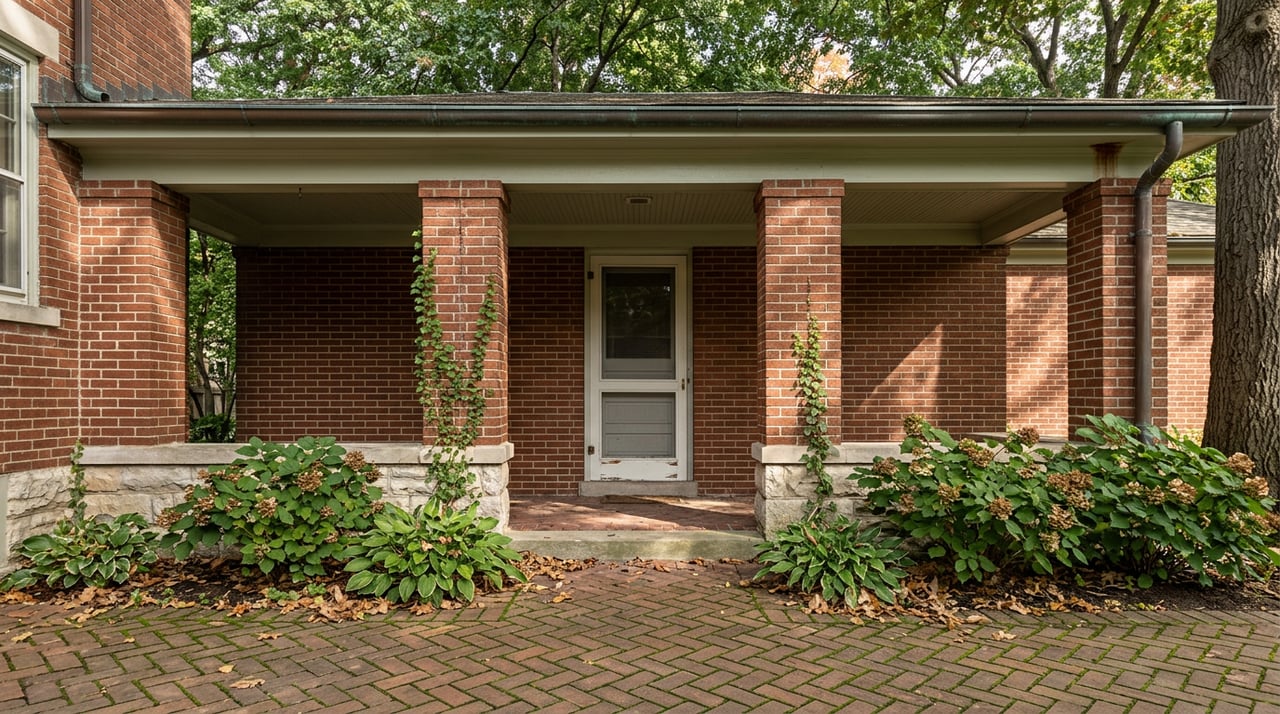
Riverside Stopped Inspecting Homes Before Closing. The Paperwork That Replaced It Is Harder to See Coming.
August 13, 2026
August 13, 2026
Search "Riverside IL home sale inspection" today and you will land on guidance that describes a village inspector walking through the house a week before closing, checking room by room, charging a fee somewhere between $200 and $325. That guidance is wrong. The Village of Riverside's own property transfer page says it plainly: an inspection is not required for property transfers.
The old requirement did exist. It just does not anymore, and the sources still repeating it have not caught up. That gap matters for anyone selling a house in Riverside right now, because the thing that replaced the inspection is not a single scheduled event you can put on a calendar. It is a document trail, and in a village where the housing stock runs back to the 1870s, that trail is where closings actually slow down.
| Old process (still described in outdated guides) | Current process (per the Village) | |
|---|---|---|
| Physical walkthrough | Village inspector visits the home before closing | No inspection required |
| Fee structure | $200 to $325 inspection fee cited in third-party guides | Property transfer fee, no inspection line item |
| Timing | Scheduled roughly a week before closing | Apply at least 5 days before closing |
| Survey | Plat of survey submitted with application | Boundary survey required, must be no more than 6 months old |
| Water | Final water meter read done in person | Final water reading done remotely |
| Output | Certificate of Compliance issued after passing inspection | Certificate of Compliance issued after permits are closed, survey is submitted, and fees are paid |
The right column comes directly from Riverside's current Selling and Transferring Property page, which states outright that no inspection is required. The left column is what you will still find in an Illinois REALTORS municipal inspection chart last updated in May 2024, and in older FSBO guidance that describes a scheduled walkthrough with a final water meter read done on site. Both were accurate when written. Neither reflects how Riverside closes a sale today.
A scheduled inspection is annoying but predictable. You know the date, you know roughly what gets checked, and you fix what needs fixing before the inspector shows up. A document-based Certificate of Compliance process removes that predictability in one specific way: nobody is walking the property to flag a problem for you. The paperwork has to be right on its own, and in Riverside three things commonly are not.
The survey clock runs out faster than sellers expect. The Village requires a boundary survey no older than six months at the time of application, submitted as a PDF (condos are exempt). A survey from a refinance three years ago will not clear this bar. Riverside's older, irregular lots along its Olmsted-designed curving streets also mean a fresh survey sometimes turns up boundary questions that a flat suburban grid rarely does. Order this early, not after you have an accepted offer.
Open permits are the real time sink. Before a transfer can proceed, the Village requires that all building permits on the property be closed. In a house that has changed hands two or three times since the 1970s, it is common for a permit from a prior owner's kitchen remodel, deck, or garage to have never been finaled. Riverside's building department can tell you what is open, but tracking down old contractor paperwork or scheduling a final inspection on a decades-old permit takes real time. This is the step that most often turns a routine sale into a delayed one, and it has nothing to do with the condition of the house today. It has to do with paperwork someone else left unfinished.
Lead service lines get flagged on the certificate itself. If a property is served by a full or partial lead water service line, the Village includes a specific notice to that effect directly on the Certificate of Compliance. If the Village does not already have a record of your service line material, Public Works may need to check it before the certificate can be issued. Given Riverside's age, this is not a rare edge case. It is worth confirming your service line status early rather than discovering it during the transfer application.
None of these three things existed as visible checkpoints under the old inspection model, because the inspector's walkthrough covered a lot of this ground implicitly. Take the inspector out of the process and each item becomes something a seller or their agent has to chase down independently.
Riverside's National Historic Landmark designation, granted in 1971 in recognition of Frederick Law Olmsted's 1868 plan for the village, covers the community as a whole. It does not, by itself, mean every house is individually regulated the way a locally designated landmark property is.
That distinction matters at the point of sale mostly for what comes next, not for the closing itself. If a house carries local landmark status under Appendix D of the Preservation Ordinance, any exterior work that requires a building permit, including roof replacement, tuckpointing, or window repair, needs a Certificate of Appropriateness from the Preservation Commission before the building permit can be issued. Interior work and paint color are not reviewed. The Commission evaluates proposals against the Secretary of the Interior's Standards for Rehabilitation, and a contractor who does landmark exterior work without the required approval risks a three-year license suspension from the Village under the preservation ordinance.
This is not a hypothetical committee. Preservation Commission meeting minutes from 2025 show Chairperson Pipal and Commissioners Boduch, Wysocki, Leary, Kaplan, Walsh, Lietuvninkas, and Padilla actively reviewing applications, including a request involving solar panels and a separate case weighing a proposed demolition against the property's inclusion in the village's historical survey. If you are buying a Riverside home with renovation plans, or selling one and fielding buyer questions about what they can change, confirming landmark status with the Village Planner before you list or make an offer saves a round of surprises later.
One related note for anyone weighing the cost of exterior work on an older home: the federal 20 percent historic rehabilitation tax credit and Illinois's 25 percent state credit both apply only to income-producing property, not an owner-occupied primary residence. For most Riverside sellers and buyers, the math on a renovation needs to work without that credit in the picture.
The building code itself also shifted this year. As of March 2, 2026, Riverside adopted the 2024 editions of the International Residential and Building Codes, the 2023 National Electrical Code, and a slate of related updated codes. Permits submitted before that date fall under the prior 2006-era code set. If you are budgeting for post-purchase renovation work, confirm which code cycle applies to your permit timing, since requirements around things like egress and energy performance moved with the update.
Put together, the practical advice for a Riverside seller looks less like "schedule your inspection" and more like "start your paperwork early." Pull a current survey before you list. Ask the Village to check for open permits on the property, ideally before you sign a listing agreement, not after you are under contract with a closing date already set. Ask about the water service line material. And if there is any chance the house is a locally designated landmark, find out now rather than when a buyer's renovation plans hit a Certificate of Appropriateness requirement you did not see coming.
Does every home in Riverside need a Certificate of Appropriateness to sell? No. The Certificate of Appropriateness requirement applies to exterior permitted work on individually designated local landmark properties, not to every home inside the National Historic Landmark District, and it is not part of the sale transfer process itself.
What if I find an open permit from a previous owner? The property still needs that permit closed before the Village will issue a Certificate of Compliance for the sale. Contact the Community Development Department as early as possible, since scheduling a final inspection on old work can take longer than a routine permit.
Do I need to test my own water line for lead before listing? Not independently. The Village checks its own records during the transfer process, and if it lacks a record for your property, Public Works may check the line material. If a full or partial lead service line is confirmed, that fact is noted directly on the Certificate of Compliance.
If you are planning a sale or purchase in Riverside and want a straight read on what your specific property's permit history and survey status actually look like before you list, the Michelle Ward Group can walk through it with you. Get your instant home valuation to start.
Stay up to date on the latest real estate trends.





The Michelle Ward Group is constantly building its reputation, which is critical to buyers and sellers of real estate. Michelle Ward Group is a well-experienced team that consistently delivers the results the most affluent home buyers and sellers demand.