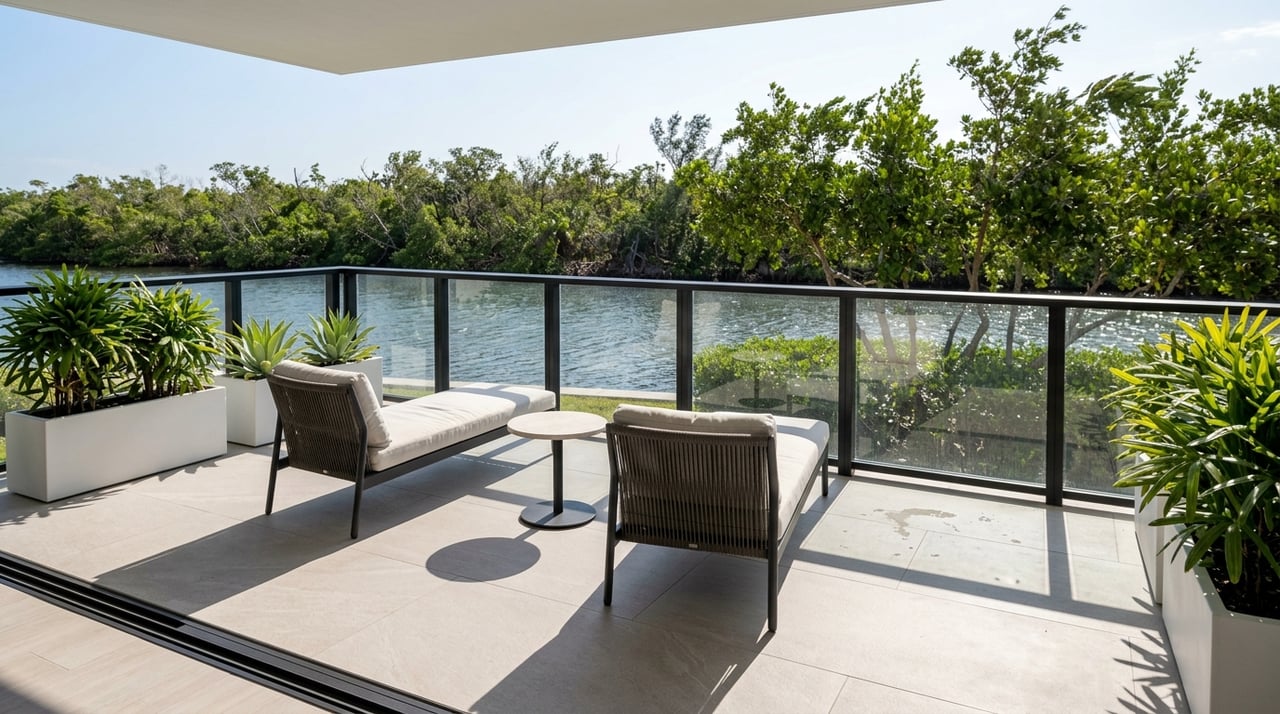
Sarasota Waterfront Condo vs Coastal Home: Which Fits?
June 4, 2026
June 4, 2026
If you are deciding between a Sarasota waterfront condo and a coastal home, you are probably weighing more than square footage or views. You are also choosing how much privacy, maintenance, cost variability, and storm-related responsibility you want to carry yourself. The right fit depends on your lifestyle, your tolerance for rules, and how hands-on you want to be once you have the keys. Let’s break down the tradeoffs.
At the highest level, the condo versus coastal home decision is about where responsibility lives.
With a waterfront condo, much of the building upkeep is handled through the association structure. Under Florida law, common expenses can include maintenance, repair, replacement, protection, security, road work, communications, and certain insurance-related costs. That can create a more managed ownership experience, especially for buyers who want a lock-and-leave property.
With a coastal single-family home, you usually gain more direct control over the property. You also take on more direct responsibility for decisions, timing, and budgeting. In practical terms, you are not paying an association to organize as much of the exterior or shared upkeep, so more of that work lands on you.
In Sarasota, this choice is rarely about one property type being universally better. It is usually about which ownership model better matches the way you want to live.
If you spend only part of the year here, a condo may feel simpler because many building-related tasks are centralized. If you want more privacy, more site control, and fewer shared rules, a detached coastal home may feel more natural. For many buyers, especially second-home buyers and relocators, that distinction matters as much as the view.
A waterfront condo can reduce your day-to-day friction. The association is generally responsible for common elements, and Florida law gives associations access rights to units during reasonable hours when needed for maintenance, repair, replacement, or to prevent damage.
That can be helpful when you want a more hands-off ownership experience. It can also feel more governed than owning a house, because the association has a defined role in how the property is maintained and protected.
In a condo, you are buying into both a residence and a rule structure. Associations can regulate common-element maintenance and hurricane protection specifications, and material alterations to common elements often require approval.
For some buyers, that structure is reassuring. For others, it can feel restrictive, especially if you value making independent decisions quickly.
Florida requires a substantial set of condo documents for buyers to review. In Sarasota, you should expect to review items such as:
This is not busywork. These documents can tell you a lot about reserves, future costs, governance style, and potential building obligations.
A coastal single-family home usually gives you more privacy and more autonomy. You typically have more flexibility over how the property is used, improved, and presented.
That freedom is a major draw in Sarasota’s waterfront market. It is often especially appealing if you want more control over design decisions, site use, or long-term property planning.
The tradeoff is that you are more directly exposed to the full cost and logistics of maintaining the property. In a waterfront or wind-exposed location, that can include storm preparation, flood-related concerns, and the timing of repairs or improvements.
A house may not come with monthly condo dues, but that does not make it a low-maintenance option. It simply shifts the responsibility from a shared association structure to your own planning and budget.
Many buyers focus first on purchase price, but the more useful question is how each property type carries costs over time.
In Sarasota’s waterfront market, the better choice is often the one with the cost structure you will be most comfortable managing.
Condo fees are often easier to see up front because they are built into a recurring dues structure. Under Florida law, those common expenses can include operations, maintenance, repair, replacement, protection, D&O insurance, road maintenance, communications, and security.
That can make monthly budgeting feel more predictable. At the same time, condos can be vulnerable to fee increases, special assessments, and reserve-driven budget changes.
If a building is subject to Florida’s structural integrity reserve rules, the association must fund reserves based on useful life, replacement cost, and a funding schedule. Those obligations can be met through regular assessments, special assessments, lines of credit, or loans, and the budget must align with the most recent reserve study.
For you as a buyer, that means reserves are not just an accounting detail. They can directly affect cash flow, future dues, and overall affordability.
For residential condominiums and cooperatives with three or more habitable stories, milestone inspections are required at 30 years and every 10 years after that, or at 25 years in some local circumstances. In Sarasota, buyers should treat that timeline as a serious pricing variable when comparing buildings.
A unit in a building facing near-term inspection work or reserve changes may carry a very different cost outlook than a similar-looking unit in another building. This is one reason condo due diligence needs to go beyond amenities and views.
With a coastal home, your cost structure is usually less standardized. Instead of paying condo dues to cover shared obligations, you generally budget directly for the building, the site, and any flood- or storm-related mitigation work.
Some buyers prefer that control because they can decide when and how to spend. Others prefer the shared structure of condo ownership because it spreads many building-related obligations across the association.
In Sarasota, waterfront living is also a risk-management decision. That applies to both condos and coastal homes, even if the risk shows up differently.
You should factor flood exposure, structure type, and evacuation realities into your decision early, not after you are under contract.
Sarasota County says evacuation levels are based on where a resident lives and the type of structure occupied. When evacuation notices are issued, the county is advising residents in the notice area to leave.
The county also notes that sustained winds above 45 mph can trigger final safety measures, and bridges and barrier islands may close to traffic. For waterfront buyers, that makes location and building type part of daily practicality, not just storm-season planning.
Flood exposure is a major distinction in coastal Sarasota, but it is not limited to single-family homes. FEMA describes coastal flood risk as including storm surge, waves, and erosion.
The City of Sarasota notes that Zone VE and related coastal high-hazard areas involve wave action and fast-moving water. If financing is involved, high-risk flood areas can also carry mandatory flood-insurance requirements for certain government-backed mortgages.
Inside the City of Sarasota, the city participates in the National Flood Insurance Program and currently holds a CRS Class 5 designation. According to the city, that can provide up to a 25% reduction on NFIP flood insurance premiums within city jurisdiction.
The city also says residents can request information on flood zones, elevation requirements, flood depths, and substantial-damage or substantial-improvement requirements. For buyers comparing a condo and a coastal home, these details can shape both cost and renovation strategy.
Ownership costs do not stop with maintenance and insurance. In Florida, property tax bills include ad valorem taxes and non-ad valorem assessments.
Sarasota County’s Property Appraiser determines value, while taxing authorities set millage. For a primary residence, Florida’s homestead exemption applies only when the property is your permanent residence.
Sarasota County’s Property Appraiser notes that homestead assessed value increases cannot exceed 3% per year, while non-homestead assessed value increases are capped at 10%. If you are buying a primary home versus a second home, that can affect your longer-term holding costs.
This is another area where your intended use matters just as much as the property type.
If you are buying a condo, there is also a closing cost that house buyers do not usually face in the same way: the association estoppel certificate fee. Florida law currently allows up to $250 for a standard estoppel certificate, plus $100 for expedited delivery within three business days, or up to $150 more if delinquent amounts are owed.
It is not the biggest line item in a waterfront purchase, but it is one more example of how condo transactions come with their own process and paperwork.
If you want shared maintenance, amenities, less exterior responsibility, and a more lock-and-leave lifestyle, a waterfront condo may be the stronger fit.
If you want more privacy, more autonomy, and more control over the site and how the property is used, a coastal single-family home may better match your goals.
Neither option is automatically simpler or smarter. The best Sarasota waterfront choice is usually the one whose maintenance burden, cost structure, and rule set align with how involved you want to be.
When you are comparing options at this level, details matter. Building reserves, inspection timing, flood-zone realities, and renovation potential can all influence whether a condo or coastal home truly fits your plans. If you want local guidance grounded in Sarasota waterfront experience and practical property insight, connect with The Michelle Ward Group.
Stay up to date on the latest real estate trends.
The Michelle Ward Group is constantly building its reputation, which is critical to buyers and sellers of real estate. Michelle Ward Group is a well-experienced team that consistently delivers the results the most affluent home buyers and sellers demand.